Disclaimer: This text is provided for informational and educational purposes only. It offers a generalized description of online systems used by public employees and is not linked to any actual ess portal, missouri ess portal or workforce portal. It does not contain professional advice or operational instructions.
Behind every stable digital platform for public employees lies a careful approach to information design. The success of an ess portal is not defined only by its technical components but also by how clearly it presents internal knowledge and how logically it arranges content. When employees can quickly find what they need, the platform becomes a natural part of their workday rather than an obstacle.
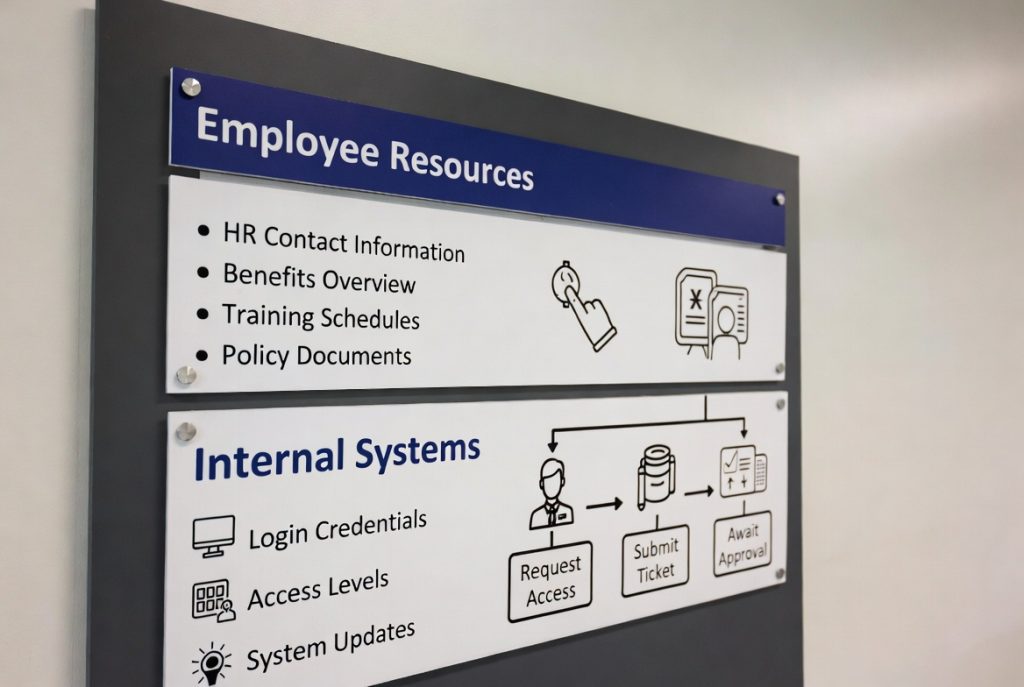
A typical workforce portal begins by defining its main categories. These often reflect core activities: accessing documentation, consulting employee resources, learning about internal systems and understanding where to go for help. Information is grouped so that general introductions appear at the top level, while detailed explanations and documents are placed deeper in the structure. This hierarchy mirrors the way people think: first seeking orientation, then specifics.
Internal knowledge is central to this design. Public organizations accumulate a significant amount of insight over time: clarifications of complex rules, examples of how procedures are applied and explanations of new initiatives. If these insights are not captured, staff may rely on informal channels that are difficult to maintain. By transforming them into structured articles within the information portal, the organization makes them part of its official knowledge base.
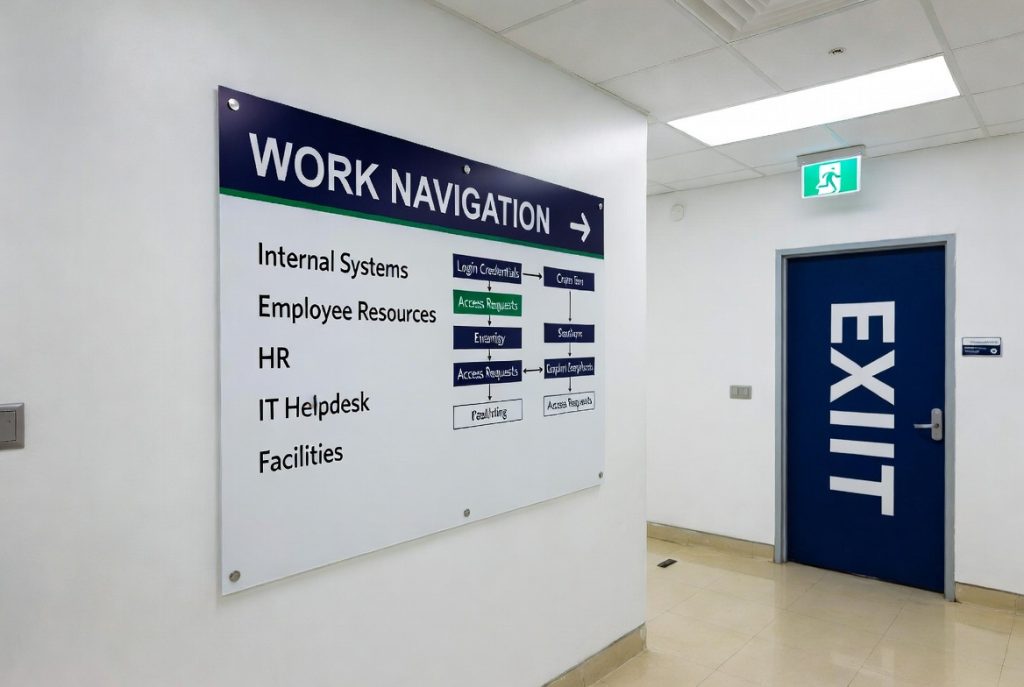
Work navigation tools connect these pieces. A clear menu, topic-based indexes and contextual links help employees move from one idea to another without losing track of where they are. For instance, a page describing a particular internal system can link directly to supporting documents, related work guidelines and a staff directory entry for the team that maintains the system. This network of connections turns isolated pages into a coherent whole.
Workplace support content builds on this foundation. Articles explaining how to interpret certain messages, where to look for updates or how to approach complex procedures can significantly reduce uncertainty. When such articles are written in neutral language and placed prominently in the portal, they signal that the organization values clarity and accessibility. Employees learn to treat the portal as a trusted reference rather than a last resort.
The staff directory also contributes to internal knowledge. It can illustrate the relationships between units, show which teams manage specific work systems and reveal which roles are associated with particular responsibilities. When directory entries are linked to explanatory pages, the portal shows not only who is involved but also what they do and how their work connects to wider processes.
HR navigation is integrated into this ecosystem by offering a structured path through rules and policies. Instead of presenting long documents without context, the portal may introduce topics with short summaries, diagrams or frequently asked questions. These introductory elements can then direct users to the full texts in the document repository, ensuring that internal knowledge remains both approachable and precise.
Another important dimension is sustainability. Internal knowledge must be maintained over time to remain accurate. By centralizing content in a single information portal, public organizations can implement regular review processes. Outdated pages can be revised or archived, while new material can be added in a way that respects the existing structure. This avoids the confusion that arises when multiple documents circulate with conflicting information.
Systems that follow the ess portal model demonstrate how thoughtful design turns complex environments into navigable spaces. By focusing on clear categories, logical work navigation, effective use of navigation tools and integration of staff directory data, these systems support both individual and collective understanding. Employees do not need to know how every underlying system works; they simply need a reliable starting point that guides them to the right resources.
Disclaimer: This article is a high-level educational description of information design and internal knowledge in public employee portals. It is not associated with any real platform, policy or organization and should not be used as a source of official instructions or decisions.